Downtown · Halifax, NS
Glass and window help in downtown Halifax and Schmidtville
Downtown Halifax packs three kinds of glass into a few blocks: tall wood sash on the heritage streets of Schmidtville and the Old South Suburb, shop glass along Barrington Street and Spring Garden Road, and the glass walls of the towers going up between them. We're a free referral service. We connect you with an independent glass professional who does the kind of work you need, and we follow up so the request doesn't stall.
At a glance
- Housing
- Wood houses in Schmidtville; low-rise heritage beside mid-rise blocks and towers
- Rules
- A Certificate of Appropriateness in the three heritage districts
- Growth
- The fastest-growing part of HRM in recent regional estimates
- Common jobs
- Wood sash repair, storefront glass, condo thermopanes, window film
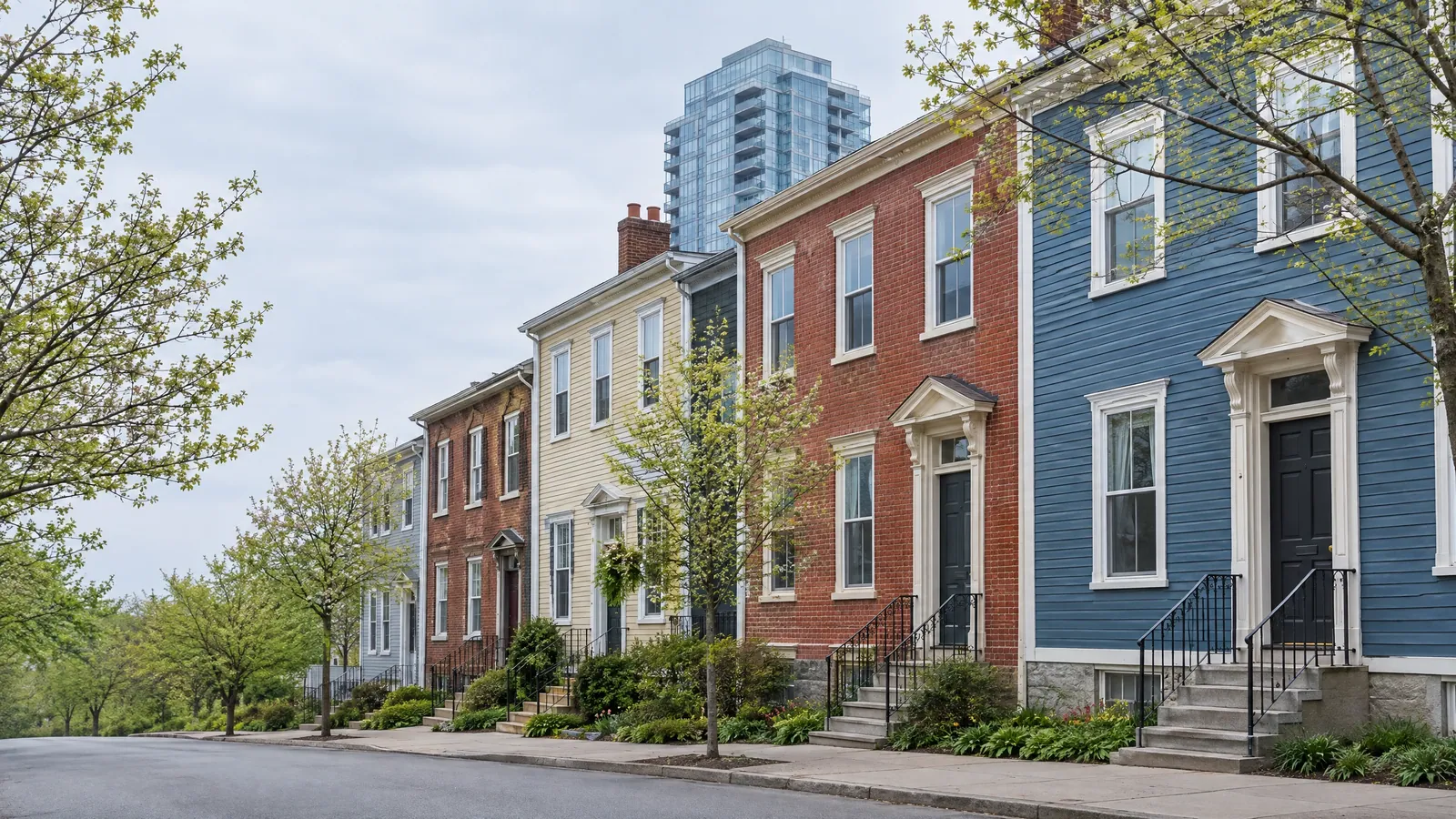
Heritage streets: Schmidtville and the Old South Suburb
Schmidtville was the first private subdivision in Halifax, and most of its houses are wood: storey-and-a-half urban cottages, mirror-image houses two and a half storeys tall, and the odd five-sided Scottish dormer. HRM's Schmidtville district plan describes the windows as higher than wide, with over-and-under sashes. The Old South Suburb grew up south of the old town's palisade in the 1700s and now mixes low-rise heritage buildings with mid-rise blocks built since the 1950s.
In a wood sash, what wears out is usually small. Fog, rain and freeze-thaw crack the glazing putty. A sash cord goes slack. Layers of paint glue a sash shut. A pro who does wood window repair can reglaze, rebalance a sash and splice new wood into a rotten sill. A new window comes into it when the frame itself has failed, and on these streets that's the moment to call HRM heritage staff, before anything is ordered.
Barrington Street and Spring Garden Road storefronts
Barrington Street has been the city's main downtown commercial street for more than two centuries, and it's a heritage conservation district of its own. There, the rules reach storefronts, upper façades, windows, doors and even exterior paint colour. Swapping a cracked pane for matching glass is maintenance; changing the frame or the look of the shopfront needs approval.
Spring Garden Road, often called the busiest shopping district east of Quebec, mixes older buildings with 1980s shopping centres built to keep a continuous shop frontage, so check a building's heritage status before redesigning a shopfront. After a break-in or a storm, the order is the same anywhere: make the opening safe, photograph it for the insurer, cover it, then order the glass. The storefront glass page walks shop owners through each step.
Downtown towers and condos
Tower glass raises two questions a house doesn't. The first is who owns it. Under Nova Scotia's Condominium Act, anything that isn't part of a unit is a common element, and changes to common elements need an owners' vote. Whether your windows and balcony door belong to your unit or to the building depends on your condo's declaration, so ask the board or manager before booking anyone.
The second is light. Upper suites can take hard glare off the harbour, and lower ones look straight into the building next door. Window film for glare or privacy goes on the inside of the glass, but many buildings still have rules about how it looks from outside. Managing several suites? See the property managers page.
What needs heritage approval and what doesn't
In Schmidtville, the Old South Suburb and the Barrington Street district, window, door and storefront changes need a Certificate of Appropriateness from HRM. Most basic maintenance doesn't, as long as materials and design stay substantially the same (HRM's heritage rules).
- Usually no approval needed: reglazing, new putty, sash cords, freeing a painted-shut sash, a broken pane replaced with matching glass.
- Usually needs approval: a new window in a different material or pattern, a changed opening, a new storefront or door design.
- Ask first: new storm windows, tinted or mirrored film on a shopfront, and anything you're unsure about.
Outside the districts, replacing a window at the same size in the same place needs no HRM building permit. Our heritage district guide has the longer version.
Popular services downtown
- Wood window repair: reglazing and sash work that keeps an old window working in its own frame.
- Storefront glass: cracked or broken shop glass made safe, then replaced to match.
- Foggy thermopanes: a new thermopane (the sealed double-glazed unit) in a sound frame, for a window that's lost its seal.
- Window film: glare and privacy film for tower suites and offices. Home and business glass only, not vehicles.
Send a photo and your street with a downtown request.
Downtown and Schmidtville questions
Do I need approval to repair windows in Schmidtville?
Usually not, if the repair keeps the same materials and design. Reglazing, new putty, fresh sash cords and matching replacement glass count as maintenance under HRM's heritage rules. Replacing the window with a different material or style is an alteration and needs a Certificate of Appropriateness. When unsure, call HRM heritage staff before ordering anything.
Can a Schmidtville house get vinyl windows?
Only with a Certificate of Appropriateness, and the district's guidelines favour keeping and repairing wood sash over replacing it. HRM's heritage grants also won't fund vinyl or aluminum windows. Most owners start with wood window repair and a call to heritage staff.
Is there heritage grant money for wood windows downtown?
Sometimes, for registered heritage properties. HRM's Heritage Incentives Program has funded exterior conservation such as wood window repair, but not vinyl or aluminum windows. Its latest intake has closed and HRM expects a new grant program, so check the page for current status. The separate incentive program for Schmidtville and the Old South Suburb has ended.
Does window film on a heritage storefront need approval?
Ask before it goes up. Film goes on the inside of the glass and can come off, but in the Barrington Street district the rules cover storefronts and the look of the façade, and a mirrored or dark tint changes that look far more than clear safety film does. HRM heritage staff can tell you which applies.
Who replaces a cracked window in a downtown condo tower?
It may be the condo corporation rather than you. Your declaration says whether windows and balcony doors are part of your unit or common elements, and that decides who arranges and pays for the glass. Under Nova Scotia's Condominium Act, changes to common elements also need an owners' vote. Ask the board or manager first, then send us the agreed scope with your request.